A painter who made sacred stories feel close enough to touch. A career shaped by patrons, ambition, violence and flight. Follow Caravaggio through the places and pictures that made his life extraordinary.
Langdon’s approach places the painter within the religious, political and social pressures of his time. It also reminds us that a compelling biography must leave room for uncertainty. Some dates and interpretations remain disputed; paintings cannot tell us everything about the person who made them.
1571–EARLY 1590s · MILAN & LOMBARDY
Before the Roman spotlight
Born Michelangelo Merisi in Milan in 1571, he became known by the name of Caravaggio, the Lombard town associated with his family. In 1584 he was training in Milan with Simone Peterzano. His early education belonged to a northern Italian world of painting before his career unfolded in Rome.
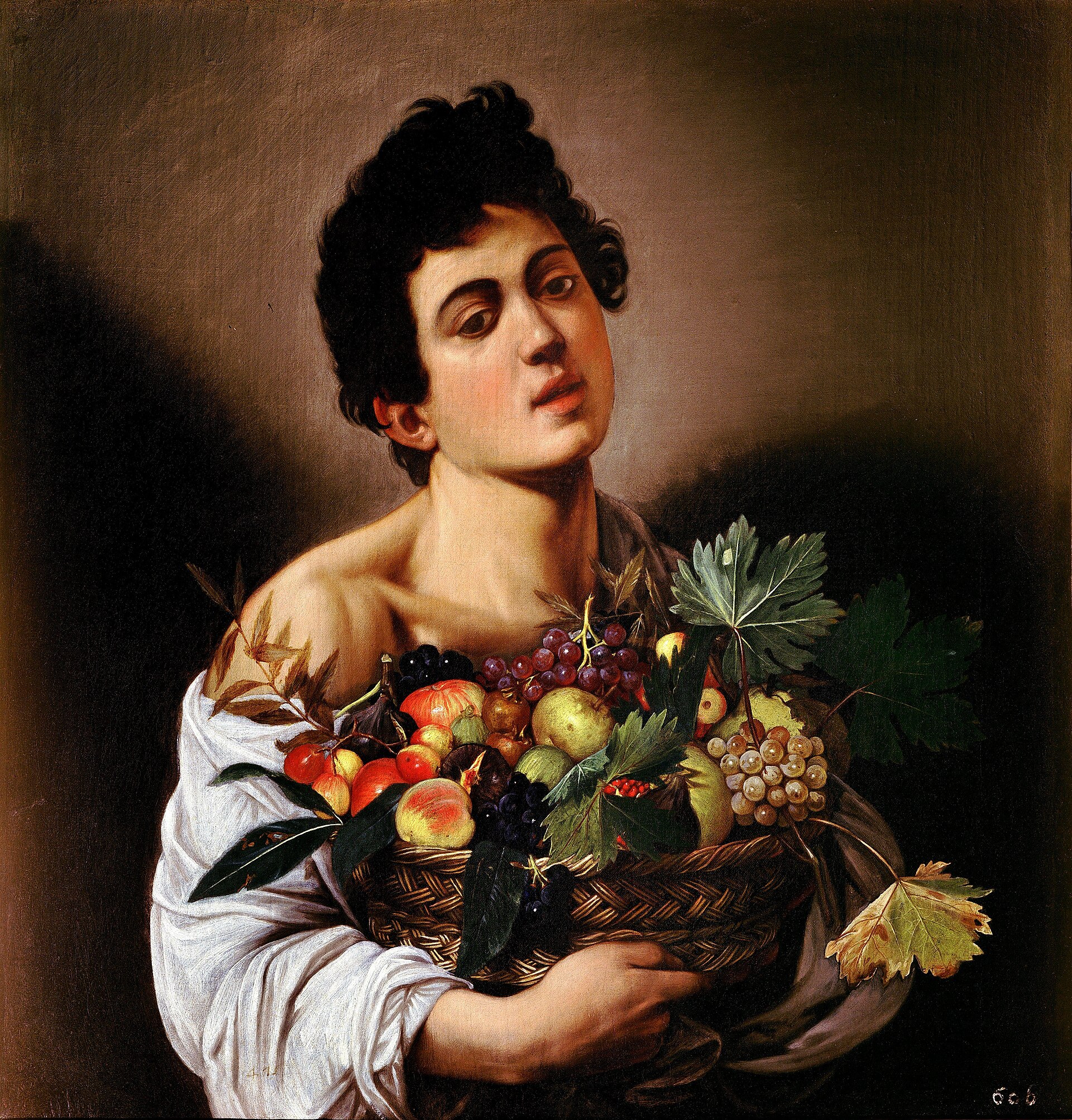
The early Roman works reveal an artist intensely interested in bodies, fruit and the appearance of ordinary things. Their dating is not always settled: the route into a famous career is less clear than the legend suggests.
Rome offered opportunity, but his first years were precarious. He painted fruit, flowers and young figures before Cardinal Francesco Maria del Monte’s patronage brought greater security and access to collectors.
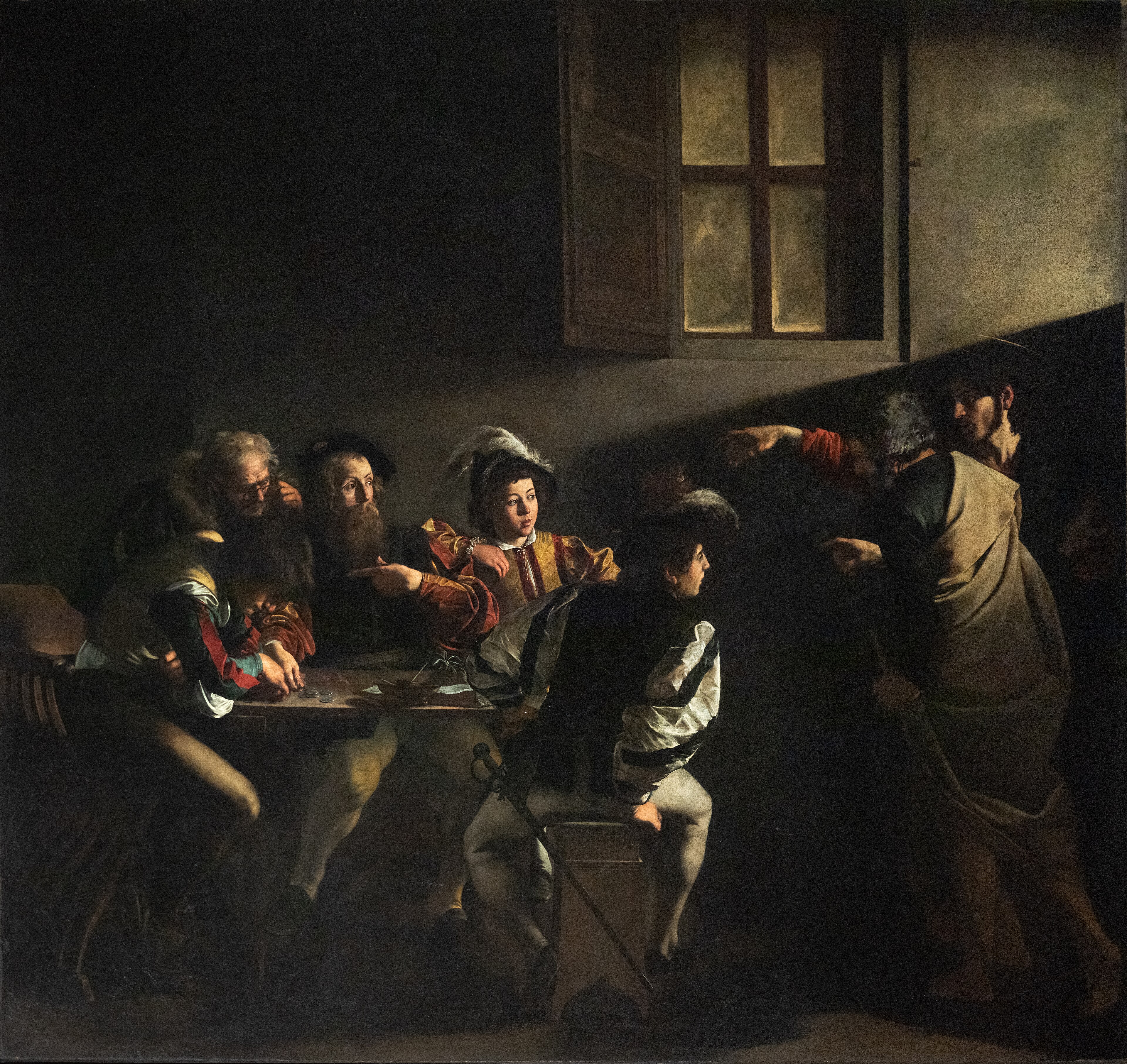
The Saint Matthew paintings in the Contarelli Chapel, unveiled in 1600, transformed his reputation. Religious history appeared to happen in a recognisable room, with figures brought close to the viewer and light giving the scene an extraordinary immediacy.
“used light to enhance the dramatic impact and give the figures a quality of immediacy.”
Christiansen describes an art that collapses the distance between the pictured event and everyday experience. Caravaggio’s direct use of posed models challenged idealising conventions. His religious scenes could provoke controversy precisely because their physical reality felt so forceful.
1606–1607 · ROME TO NAPLES
Success, violence and flight
Artistic success did not keep him out of trouble. Roman records and early biographies describe repeated clashes with the law. In May 1606 he killed Ranuccio Tomassoni in a fight and fled Rome under a capital ban.
Naples became a place of renewed work and important commissions. Exile did not end his career: it changed its geography. Painting continued to provide both a livelihood and a way to seek protection.
Caravaggio arrived in Malta in July 1607. Grand Master Alof de Wignacourt admitted him as a Knight of Obedience in July 1608. The great Beheading of Saint John the Baptist belongs to this brief period of status and opportunity.
Another violent incident led to imprisonment at Fort St Angelo. He escaped and left the island; the Order expelled him in December 1608. His Maltese chapter was short, but its paintings remain central to his achievement.
After Malta, he worked in Sicily and returned to Naples. In May 1610 his Martyrdom of Saint Ursula was sent to its patron in Genoa. A surviving letter documenting the commission helps anchor this final period in evidence.
That July he set out from Naples hoping to return to Rome and receive a pardon. He died at Porto Ercole on 18 July 1610, aged thirty-eight. The exact sequence of his last journey and the cause of death remain uncertain; the familiar story of fever comes through historical accounts.
“the real places and streets of seventeenth-century Rome and Naples”
In her 2002 interview, Langdon explained her wish to write about people and recognisable places. Her biography brings patrons, friendships and the historical city into view while questioning later mythmaking.
Finaldi used these words to describe the final picture in the Gallery’s 2024 exhibition announcement. His reading connects its emotional force with the painter’s troubled final period; it is an interpretation rather than direct access to Caravaggio’s thoughts.
National Gallery curator Letizia Treves follows Caravaggio’s career through three works: Boy bitten by a Lizard, Supper at Emmaus and Salome receives the Head of John the Baptist.
St John’s Co-Cathedral’s Meet Caravaggio trailer introduces its docu-drama about the artist’s Maltese years. The film uses dramatisation to tell the story.
His dramatic lighting and direct storytelling travelled through the work of other painters. The fashion for Caravaggism later receded, before his reputation was rebuilt over the following centuries. The National Gallery emphasises the lasting narrative force of his pictures: the invention lies in how familiar stories become urgent human encounters.
Short quotations are reproduced from the linked publications. Dates and historical accounts are drawn from museum biographies and collection scholarship.